Why I Wrote When in Rome: A Story of Growth, History, and Second Chances
Why I wrote When in Rome
“Lord knows I’ve paid some dues gettin’ through
Tangled up in blue” --- Bob Dylan
Books are a merry thing. It really is kind of like the old reading rainbow theme song. “Take a look, open a book, hop onto the reading rainbow!” Something like that, at least. But reading is about hopping inside of a new world, and it’s an age old way to do so. In my opinion reading is still the most immersive way to jump into another world. Whether you just had an argument with your significant other, work sucks at the moment, or Jeff Goldblum won’t return your fan letters, despite your due diligence in tracking down his P.O. Boxes.
Regardless of how life is going, whether it’s down and out or going pretty dang dandy, reading a good fiction book can, and will, transport you to another world. It could be a happy world, a dark world, or something in between. It could be a story about a gunslinger who saves a pretty woman from getting run over by a train – which, alas, there is a tragic lack of that lately, probably due to a lack of trains and societies growing disapproval of tying up heroine’s to train tracks, progress, nonetheless – a romance, a grand historical fiction, or a tale of heroism in the fires of war.
My point is, it’s healthy, and perhaps one of the most human things you can do, is to transport yourself into another world, via one’s imagination. To be untethered to this reality for at least a little bit a day is a gift for our species. Sure, television can achieve something of a similar effect… however, there is a reason why the book is typically better than its movie.
We’re a storytelling species. The first stories were passed down orally, then someone had the idea of writing them down, fast forward, and here we are. In a world oversaturated with books. In fact, there are so many books that it’s kind of like Netflix, now. Where the hell do you start?
Well, I’ll tell you my journey and how I started.
My life fell apart in 2021. I won’t go into great details, but I had a rough couple of years, there. I nearly died of some intestinal complications in 2019, and I spent a month in a hospital, with two months with a wound-vac around my belly. It hurt, nearly dying.
Then some personal stuff happened. Essentially, I used to think I knew everything. Now, I realize that I don’t know everything but occasionally need reminding of that fact.
So, life was rough for me, for a while. And in 2023, I began to find comfort in books again. I bought an iPad – I promise this isn’t a long endorsement for Apple Products, even though they have reached out to me several to never times – and I just started reading. The first book I read when I turned thirty, when I bought my handy-dandy iPad, was Shogun. I was pleasantly surprised when it was turned into a television show. Then I read a gentleman named Bernard Cornwell’s Sharpe books, about a Napoleonic War soldier named Richard Sharpe. They’re fascinating books if you like a good battle scene with compelling drama. That one actually is an endorsement, but, like Apple, he also doesn’t give a shit about me. I think.
Anyway, I read, read and read. Then, as I have always loved history, and I will admit I’m something of a sucker for a good romance, I was watching one of the later seasons of Outlander. Spoiler Alert – they end up somewhere where a publicly educated Englishwoman educated in the 1920’s and 30’s realistically wouldn’t know that much about. So, I had the thought:
“She sounds like an American Historian. There’s no way she would know all of this.”
I also have an English friend. He plays in an orchestra in London. And, believe me, we’re on their minds far less than we’d like to think. We may think we’re the center of the Earth, but really, that’s underground.
So, When in Rome was a culmination of things. I wanted my own Richard Sharpe, a time travel story based on the idea of sending your average Joe back in time – i.e., someone who doesn’t know hardly any history, it’s more realistic – and I have always been fascinated with Ancient Rome.
Ancient Rome is fascinating to me because it’s like a fantasy world in its splendor and deviousness. Both are exaggerated in the public mind, I’ll admit that much. Most people at the time, like now, were just trying to get by. But still, it makes for a marvelous setting, Ancient Rome. And Americans have a particular interest in Rome. We have always viewed ourselves as something of a modern analogue to the Republic, for better or for worse.
Personally I’d wish that we would learn from their mistakes rather than actively try to emulate them. They were far from perfect, believe me – because you’re reading this on the Internet.
And that’s how Travis McKinney was born. I have a good friend with a last name beginning with Mc, and Travis sounded like an average name. I’m also a Chiefs fan, so Taylor Swift’s boyfriend may have subconsciously been in the back of my mind.
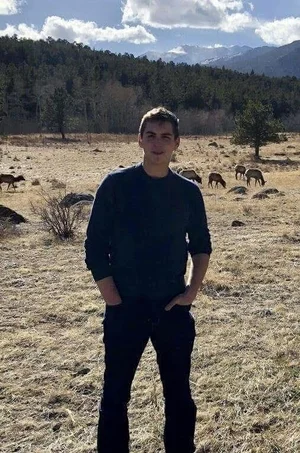
Travis is essentially me if I didn’t know any history, but, other than that, we’re a lot alike. Except I can’t grow a beard. I had a friend point out to me that I always make my video game characters have beards. Perhaps I am jealous of the bearded, but since I don’t like shaving anyway, it is likely for the best that I am a cleanly shaved, young, strapping specimen of a man.
Chat GPT told me so, anyway.
But yes, Travis is Ian. So, the book is me going back in time, pretty much. Now that brings me to, in my opinion, the most interesting character in the book:
Marty.
I’d like to say that there’s some method to the madness, some grand way that you come up with marvelous ideas for stories. I was laying in bed thinking of a good way for someone to go back in time. In Outlander, she touches a magic rock. So that was taken. Personally, I found that lame.
Then I had the idea as my brain was running its nightly miles, of an Immortal Being that controls time, who is simply bored. And the way he quells his boredom is to send people back in time, so he has something new to watch (because he’s seen everything), and thus, something to do. And in my brilliant epiphany, I figured he ought to say Jabroni a lot.
Needless to say, Marty is a character.
Literally.
I wish I could lay out a method for writing a book other than struggling in a dumpster fire, purchasing an iPad, and reading twenty books in the last half of a single year. I’m sure there is, or else authors would have a reputation for being miserable people. But that’s just my story. I’m sure you don’t have to have your entire life go to heck for a good story to pop up in your head, but it’s a solid motivation to climb out of the proverbial gutter.
Also, the actual gutter was occupied by a guy named Rhino with a switchblade. So, I needed somewhere else to go.
Writing a book feels damn good – when you’re done. Then you have the wonderful realization that you’re far from done, because you’ll have to rewrite your first book several times. I didn’t have an editor, so I rewrote mine eight. So, no one’s read When in Rome more than me. Unless someone is obsessed with me out there, like how Jeff Goldblum is playing hard to get.
So, if you have a novel idea in your head, just write it. It doesn’t matter if it becomes the next great thing and you turn it into a movie deal. In our society, we equate success with money. Even if your book makes literally no money, simply writing it, and putting it out there (self-publishing is a thing, look it up), is a remarkable accomplishment. And don’t let anyone tell you otherwise, if you choose to go and do it. And if you’re an avid reader, but think you can’t, just try. Write one sentence. Then another. Then another. Then write another paragraph, rinse and repeat. Reread it. If you think it sucks, just keep going.
Because you can fix everything later when you’re better.
That’s what I did.
Because I don’t say, in conclusion when writing; so, to finish – the story behind When in Rome is one of personal struggle and me transporting myself into another world. And, to my pleasant surprise, it turned out pretty well. It also helped me pull myself out of that proverbial gutter, and I’m pretty dang happy now. So, regardless if its turned into a movie one day – which, honestly, I think it would be a pretty good movie – it did its job.
It made me proud of, and happy with myself.
When in Rome is a story that turned into something special. If the beginning seems like it has little direction, it didn’t. I made everything up as I went along. The side-effect of an ADHD mind. I can’t outline. I just do, for better or for worse. It’s just what works for me. I’d recommend it, actually. I feel like outlines put you in a box, confining a story when maybe it should swerve and swivel a little, now and then.
It’s easy to just say, ‘Buy my book.’ Loads of people do it. But what’s not easy is to tell you why I wrote this book, because its uncomfortable; vulnerable, if you will.
So this is more than a book to me. It’s a story of personal triumph, hilarity, and personal growth. For both young Travis McKinney – my Richard Sharpe – and myself.
Sometimes in life we need to grow. Even if that growth comes with its own pains. Life’s a journey, not a destination, as they say. But I will say that reaching a better destination sure makes the journey more worthwhile.
I’m happy with my destination now. I hope happiness reaches my readers as well. That thought makes me feel pretty good and want to keep going.
Until Jeff Goldblum finally returns my fan letter.